
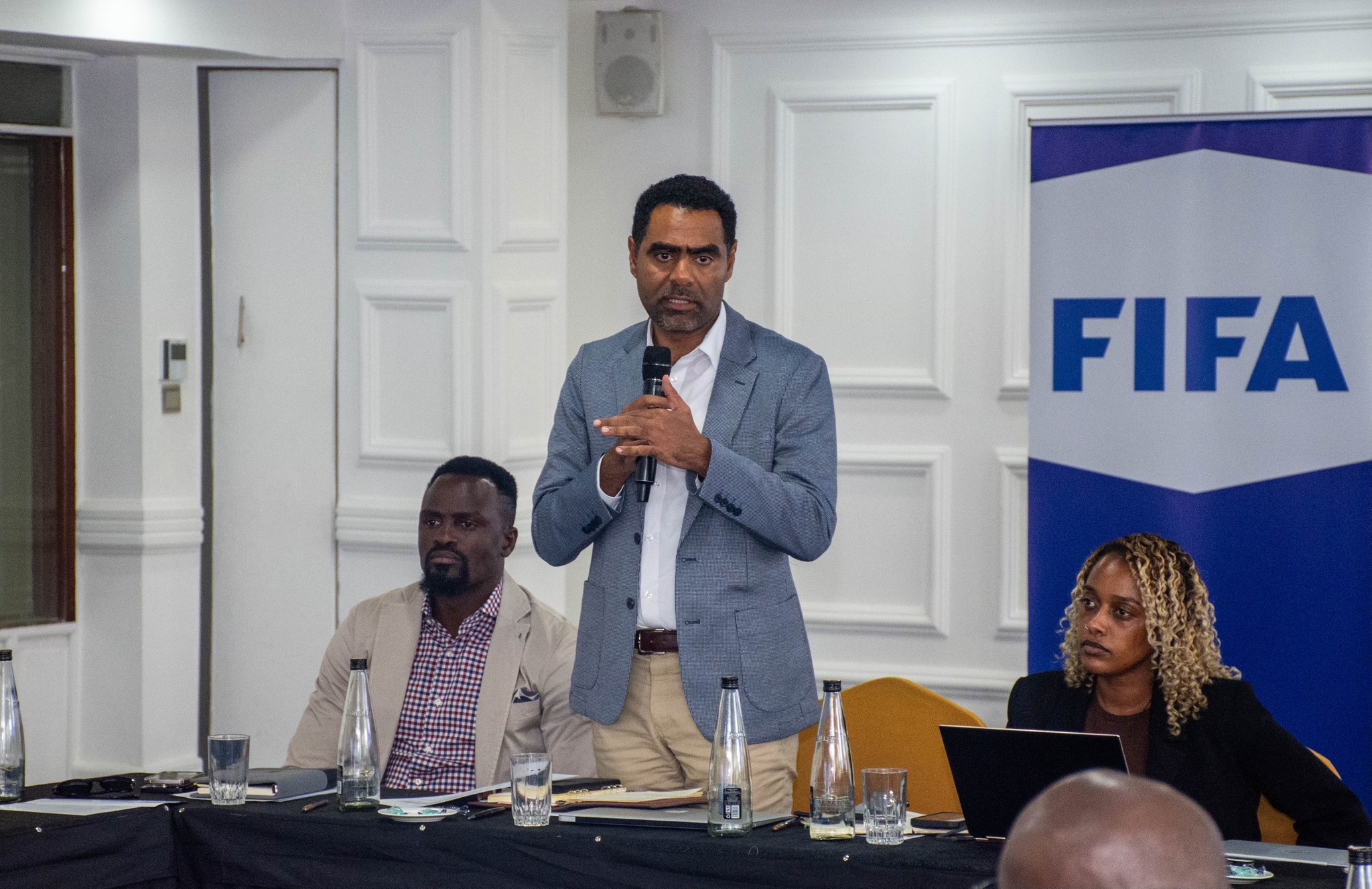
A damning report by the Football Kenya Federation (FKF) Transition Ad Hoc Committee has uncovered widespread corruption, financial mismanagement, and systemic failures within the federation.
The committee, formed to assess the operations of the Nick Mwendwa-led administration, revealed shocking details about fraudulent contracts, unregulated HR practices, and a crippling debt crisis that has left the organization in disarray.
The findings, presented by FKF President Hussein Mohammed, paint a grim picture of an organization struggling with inefficiency and malpractice.
The committee’s mandate, established on December 21, 2024, was to ensure a smooth transition, strengthen governance, and address administrative and financial gaps. However, the revelations have exposed deep-rooted issues that threaten the future of Kenyan football.
Key Findings and Recommendations
The committee has recommended a forensic audit to verify the authenticity of contracts, an overhaul of HR policies, and the introduction of a standardized salary structure.
To address these issues, the committee has proposed merit-based promotion policies for referees, a comprehensive code of conduct, and enhanced training programs. Additionally, it has called for legislative measures to combat match-fixing, including severe penalties and collaboration with law enforcement agencies.
The committee has recommended consolidating bank accounts, restructuring debts, and increasing funding for women’s and youth football to ensure equitable development.
The committee has proposed the establishment of a legal panel, harmonization of legal fees, and the use of alternative dispute resolution mechanisms such as mediation and arbitration to reduce costs.
A Call for Reform
FKF President Hussein Mohammed stressed the need for urgent reforms to restore transparency, accountability, and professionalism within the federation.
“The committee’s recommendations offer a clear path forward. We must implement these reforms to ensure the long-term growth and development of Kenyan football,” he stated.
Mohammed also called on stakeholders, including government bodies, football clubs, and the public, to support the federation’s efforts to clean up the sport. The detailed report will be presented to the National Executive Council (NEC) for validation and publication.
You may also like
FOOTBALL
FOOTBALL
FOOTBALL
VOLLEYBALL

ATHLETICS
World Athletics has unveiled demanding qualification standards for the 2028 Los Angeles Olympic Games, giving...

OLYMPICS
Kenyan fencing youngster Aliyah Makena is determined to build on her experience at the Dakar...