
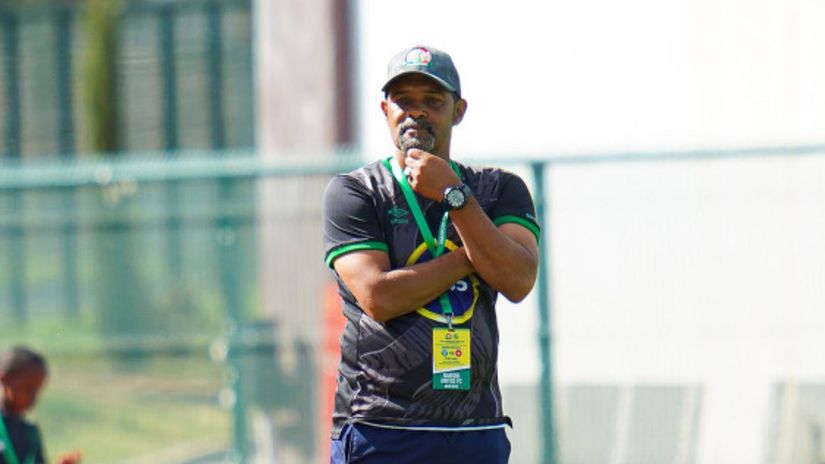
Nairobi United Technical Director Salim Ali has assured fans that the holy month of Ramadan will not disrupt the club’s ambitions as they continue their campaign in the Kenyan Premier League.
Ramadan began on Tuesday, February 17, and will run until March 19. With several Muslim players in the Nairobi United squad, questions had emerged about how the team would balance fasting with training and match commitments.
But Salim remains calm and confident.
Former Mathare United tactician said fasting is not a setback, but a matter of proper planning and positive mindset.
“Ramadan is here, but during my teenage years, I trained throughout the fasting period. It’s not a reason to stop us. Once you approach it with a positive mindset, everything works out,” he said.
Nairobi United, also known as the Naibois, have a number of Muslim players including Yusuf Mainge, Ugandan left-back Mustafa Kizza, Ashraf Dahir and Majaliwa Charo. Salim, who is also Muslim, believes this shared understanding helps create balance within the squad.
He said the club has adjusted its daily training program to accommodate players who are fasting. Training sessions last between two to three hours, allowing players enough time to rest and observe their religious duties afterward.
“The players only train for two to three hours. After that, they can go home, rest, and observe their Ramadan rituals. In fact, the team program accommodates those who fast, and it’s not only Muslim players who fast. Some teammates show solidarity, and the coaches are supportive as well,” Salim noted.
According to him, the culture of respect and unity within the team has been built intentionally, even though not everyone may fully understand the practice of fasting.
Salim also dismissed concerns about match schedules interfering with iftar, the meal taken after sunset to break the fast. He pointed out that most local matches kick off at 3pm and end by 5pm, giving players enough time to return home and break their fast.
“It would be difficult for iftar to coincide with a match because we don’t have night fixtures. By 5pm, the match is over, so it’s up to the players to make use of that window,” he explained.
For Salim, the secret lies in preparation.
“Just as training continues in Europe or America during winter conditions, the programme goes on. Players attend training and then take their time afterwards to observe their commitments,” he added.
Nairobi United returned home on Tuesday after suffering a 3-0 defeat to Maniema Union in DR Congo, a match that also saw Enock Machaka sent off.
Despite the recent setback, Salim believes the team remains focused and united — ready to push forward, even during the fasting month.
You may also like
FOOTBALL
FOOTBALL
FOOTBALL
VOLLEYBALL

ATHLETICS
World Athletics has unveiled demanding qualification standards for the 2028 Los Angeles Olympic Games, giving...
OLYMPICS
Kenyan fencing youngster Aliyah Makena is determined to build on her experience at the Dakar...